
American–Indonesian Fusion Restaurant Concept Project
Course: Hospitality Facilities Management – Spring 2024 (Instructor: Dr. Lee)
As part of the HOSP 4200: Hospitality Facilities Management course at Auburn University, I participated in a group project that challenged us to conceptualize and design a new restaurant from the ground up. This course combined lectures and lab experiences to equip us with the technical and managerial knowledge required for planning and operating food service facilities. Our team created Nusantara Bites, a fast-casual dining concept that offers an innovative fusion of Indonesian and American cuisine.
About the Project: “Nusantara Bites”
Our restaurant was designed for a target audience of young professionals, foodies, travelers, and Southeast Asian expatriates seeking a unique cultural dining experience. We imagined this restaurant located in Seattle, Washington, an urban setting known for its international food scene and appreciation for global flavors.
Our work included:
Designing the restaurant layout and back-of-house operations
Developing a full-service concept, including service flow, customer journey, seating, décor, and ambiance
Creating an original fusion menu that honors Indonesian heritage while incorporating familiar American formats
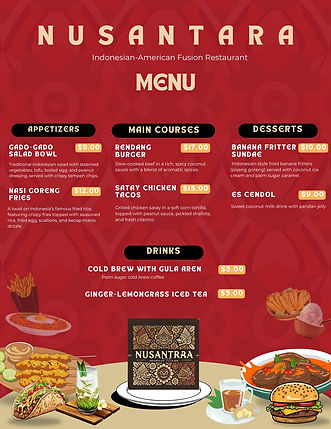
Menu Development
As a team, we developed a diverse and culturally thoughtful menu. I contributed to the ideation, portion planning, and pricing strategies. Our goal was to make Indonesian flavors approachable to a wider audience, while still staying true to our roots.
Menu highlights included
Rendang Burger – Braised beef rendang in a brioche bun with sambal mayo and pickled cucumbers
Satay Chicken Tacos – Grilled chicken with peanut sauce in soft corn tortillas
Nasi Goreng Fries – Our signature take on Indonesian fried rice, layered over crispy fries
Banana Fritter Sundae and Es Cendol – Traditional Indonesian desserts with a modern twist
Cold Brew with Gula Aren – A palm sugar-sweetened take on cold brew coffee
We emphasized ingredient functionality, dietary balance, and cultural storytelling in our final selections.

Facility Planning and Layout
Our layout was designed with operational efficiency and guest comfort in mind. I worked closely with my team to ensure that seating flow, kitchen equipment positioning, and staff movement paths were optimized.
Some design features included:
-
Semi-open kitchen for transparency and engagement
-
Teak wood communal tables and batik-pattern upholstered chairs to celebrate Indonesian artistry
-
Wayang shadow puppet wall art and rattan pendant lighting to enhance the ambiance
-
Clear service aisles, accessible restrooms, and defined zones for ordering, dining, and pick-up
-
The floor plan allowed space for about 48–50 guests while maintaining comfort and cultural immersion.
Our use of natural materials and Southeast Asian aesthetics reflected a calm yet modern dining experience.


Key Skills and Takeaways
Through this project, I learned how to:
Integrate design thinking and facility management principles into hospitality operations
Collaborate effectively within a diverse team under tight deadlines
Translate cultural values into foodservice layouts and guest experiences
Apply real-world concepts such as cost control, flow analysis, equipment sourcing, and guest safety compliance
The fusion concept allowed us to celebrate multiculturalism through hospitality, something I care deeply about as an international student from Papua, Indonesia.